
NVJDC Release Records Are Confidential
Northern Virginia Juvenile Detention Center, or NVJDC, is a secure regional juvenile facility. It serves youth connected with Arlington, Alexandria, and Falls Church through the Northern Virginia Juvenile Detention Commission and is regulated by the Virginia Department of Juvenile Justice. It is not an adult county jail. Its residents are not part of the adult roster maintained by the office led by Sheriff Jose Quiroz Jr. on the research date.
Public absence is normal here. Arlington Juvenile and Domestic Relations District Court does not provide a public online case-information lookup, and juvenile names, photos, custody events, and case records should not be presented through an adult-style roster or release list. The proper record may be available only to a party with legal authority. That can include the youth, a parent or guardian, counsel, or another person recognized by the court or the responsible agency.
Do not use the adult ACSO query, adult booking-photo request, or public recent-release workflow for a youth formerly placed at NVJDC.
- Placement
- A court-directed location or program for a youth, which may include secure detention or another juvenile setting.
- Release
- The end of a specific juvenile detention placement under the controlling order and agency process.
- Transfer
- A move to another juvenile program or authorized setting, not necessarily a return home.
- Authorized party
- A person legally permitted to receive case or facility information.
NVJDC Court-Directed Release Paths
A juvenile detention hearing or later order controls whether placement continues. When a youth leaves NVJDC, the next step can be a return to a parent or guardian, a community-based arrangement with conditions, or movement to another juvenile placement. The order and case plan determine the lawful destination. Merely learning that the youth is no longer at the center does not show which outcome occurred.
The court record supplies judicial authority. Facility or Department of Juvenile Justice records may supply the placement event and destination when an authorized requester may receive them. Any case-specific notice should be read within its exact scope. The adult concept of a Sheriff booking and release transaction does not transfer cleanly to a protected juvenile case.
| Question | Appropriate channel | Public access |
|---|---|---|
| What did the court order? | Arlington JDR clerk or counsel | No general online case lookup |
| Is the youth still at NVJDC? | Facility through an authorized inquiry | No public roster |
| Was the youth moved elsewhere? | Court, facility, or DJJ case channel | Depends on legal authority |
| May a record be released? | Record custodian or court | Controlled by juvenile confidentiality rules |
Note: A transfer to a Virginia juvenile placement ends one location's custody but does not prove release into the community.
Confirm an NVJDC Release
Begin with relationship and authority, not a public name search. A person without a lawful role in the matter should not expect the court or center to disclose protected details. An authorized person can use the known case number, the youth's identity, the court named in case papers, and the relevant placement dates to help the custodian find the right record.
The Arlington JDR Court is the Arlington court channel. The center serves more than one locality, so first confirm which court entered the order. A case tied to Alexandria or Falls Church may require a different clerk. Do not assume that physical placement in Alexandria makes every case an Alexandria court matter.
- Identify the court, case number, and the requester's legal connection to the youth. Review notices or counsel's file before contacting an office.
- Contact the proper juvenile court clerk or lawyer for the latest order. Ask what proof of identity or authority is needed.
- Contact NVJDC only through the authorized facility channel to confirm information the center may lawfully release.
- If a DJJ placement is involved, follow the case-specific DJJ route identified by the court, counsel, or facility. A new placement is not community release.
- Resolve any conflict through the office that owns the record. Do not publish or repeat protected names, photos, or case facts.
The adult Arlington County release-record path is useful only to understand why adult and juvenile systems must stay separate. ACSO's adult query, Virginia Jail VINE, VADOC adult-supervision tools, and adult booking-photo law are not substitutes for the juvenile court and facility channels.
NVJDC Authorized Contact
The facility is located in Alexandria, even though it serves Arlington youth. Use the center's public number for procedural questions and to ask which authorized channel applies. Staff may need to decline details when the caller cannot establish a lawful connection to the case. That limit protects the youth and does not prove that no placement or release occurred.
Northern Virginia Juvenile Detention Center
200 South Whiting Street
Alexandria, VA 22304
703-751-3700
Arlington Juvenile and Domestic Relations District Court
1425 North Courthouse Road, Suite 4100
Arlington, VA 22201
703-228-4495
8:00 a.m. to 4:00 p.m.
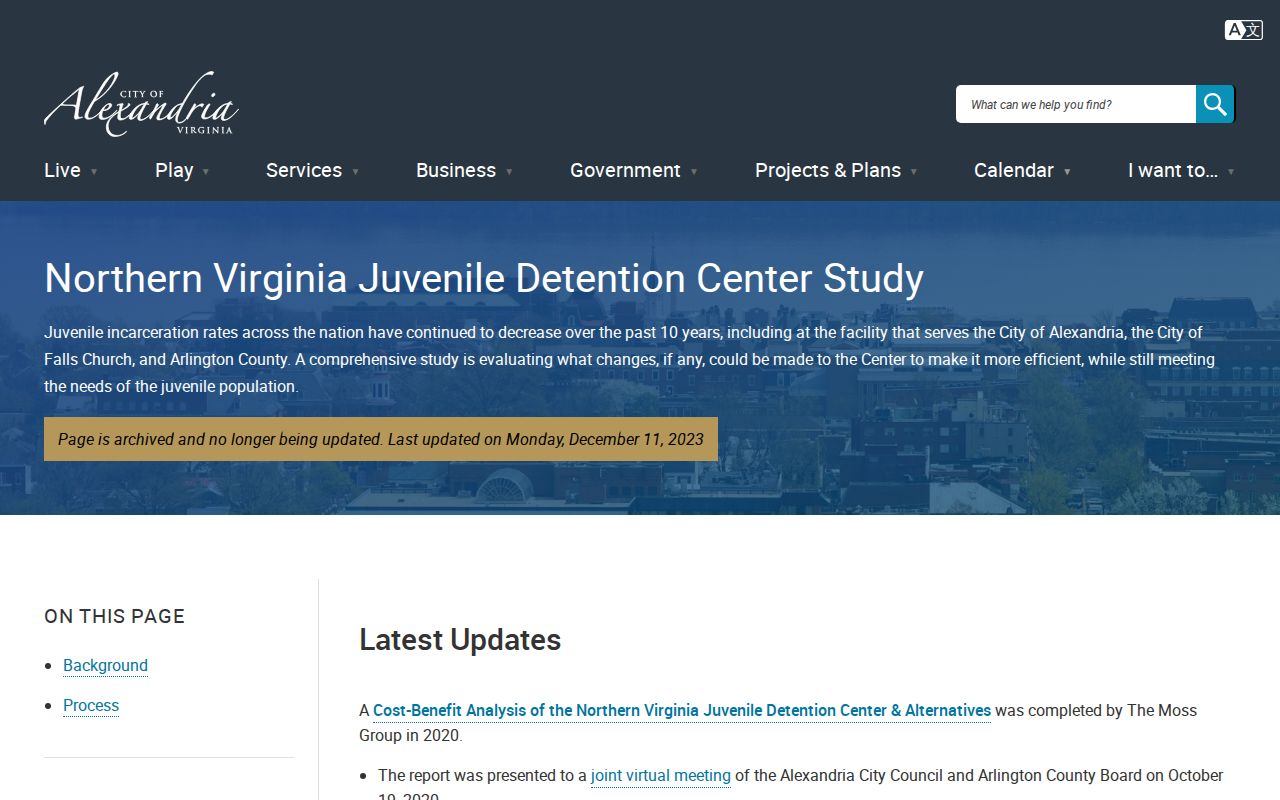
The official NVJDC study page documents the center's regional role and history. Its public study material is shown here for context.
The study is not a public youth roster. The court remains the authoritative source for Arlington judicial orders. A facility conversation may address logistics, while counsel or the clerk can explain the process for seeking a record that is available to the requester.
NVJDC Has No Adult Roster
Arlington's adult jail query states that it covers people currently in ACSO custody. NVJDC youth are outside that scope. An adult roster miss carries no information about juvenile placement, release, transfer, or court status. The same is true of Arlington's lack of a 24-hour or 72-hour adult release feed. Neither page should be used to assemble a list of youth who left detention.
Booking photos follow the same separation. Virginia's adult routine-intake photograph access rule does not authorize a public juvenile mugshot process. Do not request a juvenile image through an adult ACSO booking-photo route. Sealed, protected, and confidential case information must remain within the channels defined by the court and juvenile authorities.
A missing online result is not evidence. The reliable conclusion is narrower: the adult system does not publish the juvenile record. An authorized person must rely on a court order, facility or DJJ record, or case-specific notice that can lawfully be shared.
NVJDC Federal Contracts Ended
Historical materials require careful dates. According to the official juvenile detention study fact sheet, NVJDC's contract connected with the federal Office of Refugee Resettlement ended in September 2018. Its U.S. Marshals Service contract and related ICE rider ended in August 2019. Those agreements are no longer current detention routes and must not be described as active.
The dates also prevent a false search path. A person seeking current federal custody information should not treat NVJDC as an active ICE or USMS release source because of an old study reference. Federal and immigration systems have their own custodians, and juvenile confidentiality can still restrict details. Current questions about an Arlington youth must start with the court, center, counsel, or DJJ channel that actually controls the case.
| Historical agreement | End date | Current meaning |
|---|---|---|
| Office of Refugee Resettlement contract | September 2018 | Not a current NVJDC custody channel |
| USMS contract and ICE rider | August 2019 | Not a current federal detention route at NVJDC |
NVJDC Release Record Boundaries
An authorized request should be limited to the existing record needed for the case. The custodian may ask for proof of identity, guardianship, representation, or party status. Some information may be provided to counsel or through the court rather than directly from the facility. Those safeguards are part of the record process, not an invitation to find the same material through public copies.
Juvenile release should also be described with care. “Released from NVJDC” means the youth left that specific secure placement under lawful authority. It does not state that every juvenile case ended, that all conditions ended, or that the youth entered the community without another placement. Use the language in the order or agency record. Avoid adult corrections terms unless the actual document uses and defines them.
Current facts can change. Confirm the court, location, and contact information before travel. When records conflict, compare dates and the scope of each source, then ask the record owner to resolve the difference. The most accurate outcome may be that information cannot lawfully be disclosed to the requester.
Note: Confidential treatment protects juvenile case information and should never be treated as proof of either custody or release.